Showing posts with label Romania. Show all posts

Saturday, February 15, 2014

Bucharest. Current Events. Romania Draft Legislation. Dolphin Personhood. Recognizing Dolphins as Non-Human Persons. Draft Legislation.

What human qualities, if found in a creature not human, shall afford that creature the rights and protections of a human. Remus Cernea, legislator in Romania, the Black Sea area, city of Constanta, has appropriate ideas. He would afford to dolphins the same rights as people. Personhood, so that killing a dolphin, for example, would be subject to a murder analysis.  Would it be reciprocal? For another day.  For now, whether this effort succeeds is not the issue.  The issue is the effect of raising how we exploit creatures to the level of legislative discussion that is more pivotal to the cause of how we coexist with our fellow planet earth residents over time. See http://uk.reuters.com/article/2014/02/14/oukoe-uk-romania-dolphins-idUKBREA1D1J920140214/.  For Mr. Cernea's Statement, Remus Cernea, and text of proposed legislation at the Draft Law, http://voxpublica.realitatea.net/politica-societate/draft-law-for-recognizing-dolphins-as-non-human-persons-102731.html

This is news in any nation that eats, uses, keeps animals. Dogs have long been excluded from humanitarian considerations in Romania, for example, even when pets. I recall in Romania the hundreds of stray dogs, all breeds, wandering alone or in packs even in unpopulated areas. Dogs forced loose by laws that forbade residents forced out of their homes for governmental purposes from taking their pets with them.  We reminded ourselves, tempted to pet, to talk softly, to coo, hello puppy, to keep hands in pockets, eyes ahead. Our impression was that Romania did not care, or was not allowed to care, about its animals. See http://www.occupyforanimals.org/romania---on-the-greatest-animal-genocide-in-european-history-government-initiated-anarchy-violations-of-human-rights-and-children-rights.html

1. So what is changing? Thinking. Thinking as to dolphins, if not dogs. Any nation can boast a politician, a lawmaker, with ground-breaking causes, but this cause should be spread.

Romanians are accustomed to Michael the Brave, who in the the tumultuous 16th C ff, managed to unite disparate interests with Polish, Hungarian, Transylvanian groups at each other. No quarter given to those subject to slaughter. He then lost, with betrayals, brutality ensued, Michael returned, prevailed but was assassinated, see Zsigmond Bathori, ,Michael the Brave, and Giorgio Basta article at http://mek.oszk.hu/03400/03407/html/118.html. Scroll down to 1-753.   It is time for Remus the Brave.  Is that so? Or too melodramatic?


For Remus Cernea, imagine the interests that will rally against his vision. May he, as we say, stay strong and perhaps America can follow.

2. Then ask:  On what ground do humans exploit, dominate, use fellow creatures. Because we can?  Because our religion (whose?) translates taking dominion to domination and not leading gently as a god?  See meaning of dominion, from old texts, at Vetting Roots, http://martinlutherstove.blogspot.com/2009/04/what-do-you-do-i-create-tumors.html?q=dominion.  Lead gently, as a god.

3.  Here, Cernea cites the dolphins' high intelligence, relationships within the pod, with other creatures, personality, but all that is only a start.  With equality of right to a life, even if environmentally different, and without ten digits up and down, killing would be subject to the same analyses as murder. The Black Sea rejoices.

Japan is recently in the news for its corralling of dolphins into a killing bay, slaughter of those who cannot escape.  Is it really just a matter of culture, and such deaths not to be reviewed by anyone not of that culture.

4.  How does the draft law look?  This cannot be subject to copyright, so here it is:  Let the Romanian legislature address all issues with clarity and vision. And go to the site and order a T-shirt. http://voxpublica.realitatea.net/politica-societate/draft-law-for-recognizing-dolphins-as-non-human-persons-102731.html


Draft law for recognizing dolphins as non-human persons


Art.1 All species of dolphins enjoy special protection on the territory of Romania, each individual of this species being considered to be a non-human person.

Art. 2 The hereby law defines a non-human person any being that does not belong to the human species, yet posses a developed intelligence, the capacity to form complex social relations, and is the bearer of the following rights:

1. Right to life

2. Right to bodily integrity, and to be free from any acts of cruelty

3. Right to free movement in their own natural environment, not to be captured or hold in captivity with other purposes other than to be offered medical assistance or to be protected from an impending danger.

4. Right to be protected in the own living natural environment, and not to be separated from the group or family he or she belongs.

Art. 3 Any violation of the rights of non-human persons is forbidden and shall be prosecuted with penalties that are equivalent with those stipulated in the Penal Code for violation of similar rights of human persons.

Art. 4 (1) Any current activity involving holding dolphins in captivity and/or using them in various entertaining facilities will cease in no longer than 12 months from the adoption of the hereby law.

(2) During this 12 month period, all dolphins that are considered fit for reintroduction by the specialists will be released into their natural environment populated by the same species.

(3) The dolphins that do not meet criteria for reintroduction in their natural environment will be placed in specialized care for the rest of their lives, and will no longer be used for entertainment purposes on any other purposes that will contravene the status of non-human persons.

Friday, November 15, 2013

Bucharest area. Current Events: Buzescu and Roma, Tsigani, Gypsies


We found several towns where the Roma arriving for an evening's entertainment, perhaps a casino, as in Sighisoara, were in limousines, in beautiful, lavish clothing.  Here, however, is the first article we found affirming that population's presence elsewhere:  National Geographic, September 2012.  Buzescu is south of Bucharest. We did not get there. Is it instead Buzescu Sidonia, near Pitest; or Buzescu HM, farther south from Pitest.

Of special interest is nomenclature.  We understand that "Gypsy" is often seen as derogatory, with a cultural preference for "Roma" instead.  Yet, both may well be needed for more direct communication with those of us on the outside, who are not familiar with Roma as different from Rome, etc. 

Here, we learn that some Roma in Buzescu, Romania, prefer to be called Gypsies or Tsigani.   

Saturday, June 23, 2012

Travel tips. Cash for the Road. Complex Astoria. Dog Precautions; Eating


Precautions.

1.  Take some cash.

Do not assume that there will be ATM's immediately outside the main city where you land.  Use the airport rather than wait.  For more speed, take some cash in the local currency with you, despite the cost of doing that in the US, just in case.  Heading north toward Snagov, we were suddenly beyond urbanity, and there was no immediately visible place and no banks outside Bucharest for
ATM's that we could see.

Cash was vital.  The next largest town, Brasov, of course had ATM's, but we needed our ready cash for eating and spending the first night.

We got to the Snagov area in late afternoon, got ourselves well lost among little, poverty-overwhelmed villages and dirt-rutted roads. When we found the Complex Astoria to spend the night, we found out why the signs were down. It was closed for the season.  They opened a room for us, and luckily we had cash to pay. No credit card option there.\

2.  Pocket your hands. Stray dogs.

Hand safety can be an issue for the careless, walking around.  Ask before being friendly with dogs, and if noone is around, pocket your hands.  There are homeless dogs everywhere, in packs, and by themselves.

Why? We understand that Ceaucescu would not let people take their pets when they were moved wholesale in Bucharest and elsewhere out of neighborhoods that were then razed for big government buildings and boulevards, into high rises.  This is a huge issue, not only for humane treatment of all living, but for public safety.  See http://www.koirienystavat.com/en/dogs-in-romania/.   Puppies, show dogs, all were set loose. Thousands upon thousands are out there now.

These are often identifiable specific breeds, cockers covered in burrs, little doggies, even still.  New parliament buildings were needed.  Was that necessary, to forbid the pets, given the public health and other nuisance now?  By way of update, see http://www.ibtimes.com/romanian-stray-dogs-slaughtered-streets-red-card-romania-spreads-facebook-1505630

We were told to keep our hands in our pockets, so we did. The dogs trot along with you, just don't pet. Others not so friendly. We were told not to experiment.

3.  Food when there are no restaurants

Dinner when there is no dinner.  Magazin Mixt.
.
Magazin Mixt means convenience store. At Lake Snagov, we had a fine meal from a general deli (dried sausage, rolls, cheese), a kind of bodega, at a village. People and especially children came around to stare, but we felt welcome and safe.
.

Sunday, June 10, 2012

Brasov, Bran Castle

Bran Castle is part of the Vlad Tepes collection of sites, in detail at http://romaniaroadwaysvladtepes.blogspot.com/2006/08/bran-castle-brasov-popular-tradition.html.


Bran Castle, a rainy look-back.

Our route:  Airport at Bucharest, head immediately north to Lake Snagov where Vlad Tepes may or may not be buried or have been buried all or in part, see Sinaia and Peles Castle, and then on to Brasov.

Find Bran Castle and the other Vlad Tepes sites in detail and with photos at  Romania Road Ways II, Vlad Tepes, site, at http://romaniaroadwaysvladtepes.blogspot.com/2006/08/bran-castle-brasov-popular-tradition.html. 

We integrate them here as a place holder.  How to see where we went, if we totally separate out Vlad Tepes?

Bran Castle:  obvious from the roadway, go there.

Tuesday, June 05, 2012

Rasnov Citadel


Romania was on the routes to the Crusades in the Holy Land, and this castle fortress was built by German knights, the Teutonic Knights. The citadel dates from the 1200's. Find the Teutonic Knights and their incarnation in many places, especially in the Baltic area as Malbork, see  Poland Road Ways.  Rasnov is known in German as Rosenau. With so much fallen into ruin, it was being reconstructed when we were there.  There was no restriction on access, up and down staircases, parapets.  This is the area known as Burzenland, see http://en.wikipedia.org/wiki/Burzenland/  Tartar invasions stopped its development as a monastery.  Little houses within the walls served to protect refugees from the invasions below.

It was under construction, renovation, when we were there.  See it now (update 2014) at http://www.romanianmonasteries.org/romania/rasnov-citadel/. 

Teutonic Knights and Crusades.  After the crusades failed, the Teutonic Knights, then unemployed, regrouped as mercenaries in the Slavic countries, here, Poland, at their castle at Malbork.  Once militarily trained, and ideologically set, the context for activities is mutable.

There is a lovely video on Romania that includes the fortress, at http://www.youtube.com/watch?v=d6eXrgs5tHo.  Visit and find signs not to a hotel, but to a pensione. Follow the rutted road, around and around, and within a wall is a fine, hospitable place to stay.  

The coloring in the video is closer to the real -- camera flaw on my part here. Some photos come out purple.

Sunday, May 20, 2012

Sinaia - Peles Castle

Sinaia, Peles Castle, Romania

Arrive at Bucharest, drive north, see Lake Snagov where Vlad Tepes was said to be buried in part at the monastery there; and then Sinaia. Peles Castle.

Sinaia. It is a prime ski area, great resort, and there is a splendid castle.  A fine video of Peles is at http://www.youtube.com/watch?v=fq9O9ecRVlM&feature=related/.  For photos and surroundings at  http://www.montania.ro/en_vile.

Beware of claims to a Vlad Tepes connection.   The castle, Peles, has no connection to Vlad that I can find, but this site suggests by its name that it does - http://www.draculascastle.com/html/pelesint.

Peles was built, instead, by King Carol I during a period centuries after, in the 19th Century, 1873-1883. See http://www.infotravelromania.ro/en/castle. Still, it is magnificent, and the photos at the infotravel site include other castles - worth a look.  See also  http://visit.peles.ro/the-history-of-the-peles-castle/

Carol I, King Charles I.

The town has all the shops and cafes you would expect. We don't shop, we people-watch and this was excellent for that.

Sunday, April 08, 2012

Sighisoara, Vlad Tepes Birthplace; World Heritage site


Sighisoara: Birthplace of Vlad Tepes
Vlad's family home is now a Restaurant

Sighisoara, birthplace of Vlad Tepes, Romania
Sighisoara was established by the Saxons of Transylvania.

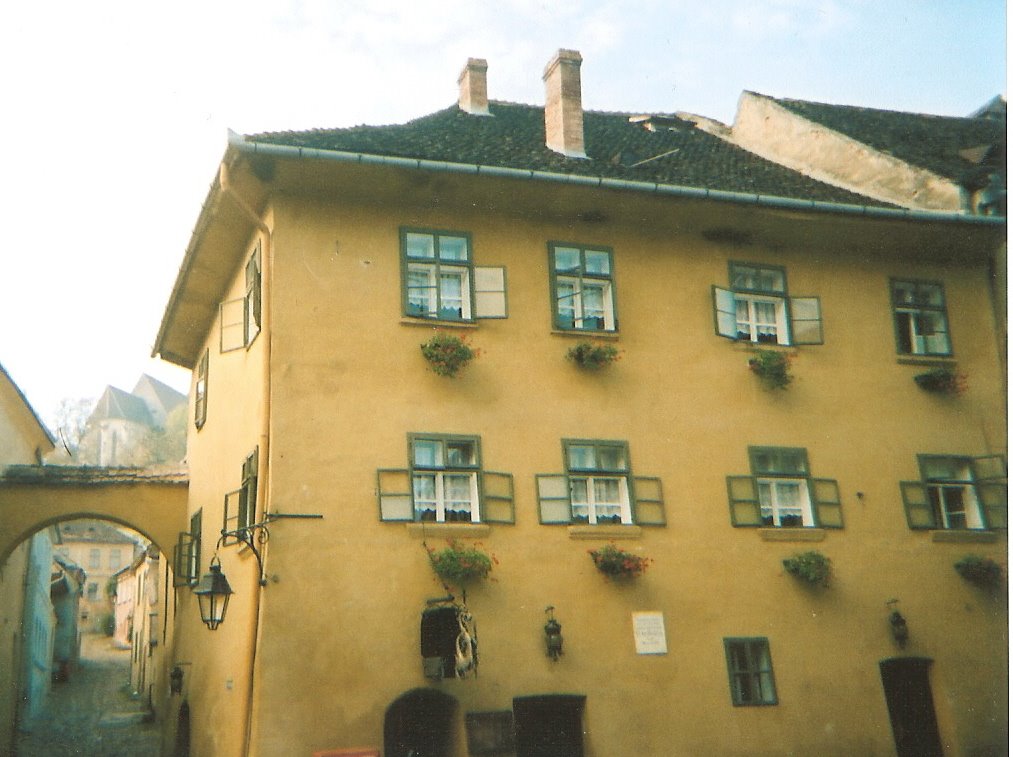
1.  Birthplace: The big yellow house.

The home where Vlad Tepes was born in 1431 is now a restaurant. Expect and get generous portions of good basic food. Sauces and frills are few, so the atmosphere seems authentically Romanian.

The town is in excellent medieval condition, never bombed, or overrun. See the photo gallery at http://www.world66.com/europe/romania/sighisoara/lib/gallery.Although he ruled Wallachia for periods in a brief timespan, 1456-1462, his reputation suggests a far longer domination.

2.  Monuments and The Novel, Dracula.

There are references to Vlad Dracula in many places, and they often refer to the novel, Dracula, by Bram Stoker, even though it is far removed from the life.  Reread the Stoker novel at Dracula, http://www.literature.org/authors/stoker-bram/dracula/

As in other Romanian cities with ties to Vlad Tepes, there are excellent descriptive plaques in Sishisoara. They separate out the kitsch, and offer historical information particularly where Bram Stoker made other fictional claims. The result is to interest people who want to know what really is known, or reasonably so; as well as those who want to follow in Bram Stoker's characters' steps without critique.

Entire tours are devoted to Vlad, but the distances between real sites is great, and there is too much to see in between to focus only on Vlad.. The Romanian Tourist Bureau provides an overview of his life as told in legend. See http://www.draculascastle.com/html/poenari.

3.  World Heritage

Sighisoara is a World Heritage site. See http://www.romanianvoice.com/images/orase/sighisoara.php. The full list of places on the Romanian World Heritage honor roll is at http://www.thesalmons.org/lynn/wh-romania. Fine photos: at this Unesco site --  http://whc.unesco.org/en/list/902


Saturday, August 06, 2011

History, Culture. Vlachs: Dacians, Geto-Dacians, early settlers in Romania, nomadic shepherds

Vlachs, Dacians, Geto-Dacians, Migratory Ethnic Groups


Vlach shepherd, Romania


This shepherd was alone in herding a large flock of sheep, as we all waited for them to scurry among the 18-wheelers and cars, through the village. Their dogs are indispensable. See more on the Romanian shepherd dogs at http://www.romdogs.tripod.com/ogar/romshdog.
.
The shepherd we watched leaped across the road, carrying his possessions (no carts seen); and was gone. Stragglers among the sheep ran to catch up, and did, but he did not call. No sheepdogs.  Vlach origins, north and south of the Danube: http://www.fact-index.com/h/hi/history_of_vlachs.html.  Traders, shepherds, craftsmanship. Chronology there of dates and events.
.
Someone described that kind of sight as a cloud of sheep. Exactly. Find one such reference at Dominick Finello's Pastoral Themes and Forms in Cervantes' Fiction/.
.
Vlach sheep, crossing road, Romania
.


The Vlachs are an ancient people that are in many eastern European countries. Tradition roots them in the Indus Valley, India migrations of an ethnic group commonly called "gypsies", or Roma (nothing to do with Rome, however), whether accurately or not, these peoples have kept their own ways.
See Gypsies, Roma, Romani.
.
Vlach may the root of "Wallachia" or "Vlachia". Some believe that it was the Vlachs who originally founded Romania, and were the indigenous people when the Romans came. See the Romania section at http://www.mysite.du.edu/~etuttle/misc/europe.htm#Mong
.
The Vlachs remain distinct. There were also, however Dacians in the area, another group also laying claim to the indigenous people-founding Romania status. http://www.rotravel.com/History/The-Geto-Dacians/ Their leader, Burebista, 82-44 BCE, opposed Caesar. The society was strong and well organized: they conquered some area Greek cities, and fended off the Celts. Also known as Geto-Dacians, they are referred to from the 6th Century BCE, with Herodotus the first to use the term "Getae" for the peoples north of the Danube. Danube?  Germany?
.
The Danube stretches from its mouth at Moldavia-Romania (delta), back through borders with Bulgaria, then Serbia (old), Hungary, Slovakia, Austria, etc. See map at http://www.donau-info.org/donau.php?pg=0&lg=en.  The mighty Danube became the border, back at the Romanian history site now, between the Geto-Dacians and the Romans.  Finally, after fierce wars, the Romans, through Trajan, won. http://www.rotravel.com/History/The-Geto-Dacians/  Migrations ensued among tribes opposing Rome. Greek and Roman documents, says http://www.eliznik.org.uk/RomaniaHistory/dacia.htm, called these people Thracians. Other kings:  Decebal and Dromihetes.

Geto-Dacians. This also puts the Getae in line, possibly, as the Geats, the tribe later found in northern Europe, the tribe of Beowulf. Beowulf, earliest poem, Saxon, see http://www.alcyone.com/max/lit/beowulf/. 

Hwaet! That is the word commonly translated as "Lo!"  or "Hark!" See first line of poem, Beowulf.  Nuts.  it is Hwaet!. See http://www.urbandictionary.com/define.php?term=hw%C3%A6t

 See http://www.awesomestories.com/flicks/beowulf-grendel/who-were-the-geats.  Much speculation as to the origin of the Geats. Did they migrate, with many others, north, right up the Danube? Across Carpathians, through Caucasus? Why not look here, scholars? Wikipedia starts its analysis of identity long after the migrations of north-of-Danube peoples unwilling to live under Caesar, see http://en.wikipedia.org/wiki/G%C3%B6tar.  I started far earlier, see Sigge Fridulsson, Fridulfson, and the Swedish legends (legends themselves rooted in unknowable events?) at Sigge Fridulsson, Caucasus Migration North, Caesar Era

 More Vlach history http//: www.friesian.com/decdenc2, and at http://www.eliznik.org.uk/RomaniaHistory/vlach-south/; and ://www.columbia.edu/cu/romanian/articles/aromani. And, of course, a book:  http://www.amazon.com/Vlachs-History-Balkan-People/dp/0312009372


.
Road manners.

The fun part here was the good humor of the truckers stopped in their tracks in the village -- no anger, no fingers, just open the window, lean out and chat and smile in good humor as, when all seemed to be past, somebody went under the truck to coax out the last straggler. To an outsider, it looked like respect for someone else's assets and way of life. Room for many. What's the rush.
.
Less developed countries respect others' lives more.  Is that so?  I seldom saw any kind of road kill. That may not mean a particular love of animals -- stray dogs are everywhere -- recognizable breeds --  from the edicts in Bucharest that people whose neighborhoods were destroyed by Ceaucescu's urban renewal.  Apparently, people could not move into the new apartment highrise boxes, with dogs. The absence of road kill could mean, rather than altruism:  1) skill in veering; and we agree; or 2) the practical side. A hit may damage your own vehicle.
.
We have found them in Greece and Croatia, for example, see more about "Aromanian Vlachs: The Vanishing Tribe," at http://www.vlachophiles.net/.

Wikimedia Commons provides this map of migrations, and the resolution is as you see it: see http://commons.wikimedia.org/wiki/File:Migration_des_Roms.jpg
.
File:Migration des Roms.jpg

There are supposed to be some Vlachs in Texas - see map and discussion of migrations at http://www.angelfire.com/tx5/texasczech/Valachs/Who%20are%20the%20Valachs.htm
.
Modern map of Eastern Europe, for identifying the foggy lettering above: Wikimedia Commons at http://commons.wikimedia.org/wiki/File:Eeurope_rel84.jpg

File:Eeurope rel84.jpg
The mother of the Hungarian hero, Janos Hunyadi (governor of Transylvania in the 15th century, castle at Hundoara, Romania) was said to be Vlach. The Vanishing Tribe site says that Vlachs set up Wallachia.
.
Update - from our 2007 trip to Poland:
.
Some Vlachs migrated to Poland - see the Magurski National Park site at http://www.staff.amu.edu.pl/~zbzw/ph/pnp/magu.htm. There, the people were called "Lemks," and lived in the Low Beskid region, with only a few survivors now. There are vestiges of their culture, and later orthodox religion there, and in roadway shrines. The article says they were deported in 1947 for political reasons. See populations post at Poland Road Ways.
.
Vlachs - Once there is an awareness of something new, all sorts of other information comes out - now we find Vlach references in many places and contexts. More at a Vlach site, http://www.bastian.freeyellow.com/index.

Sunday, March 06, 2011

Putna. Painted Monastery; Cabanas for Hikers Trekkers

Monastery, Putna, Romania
.


Timing is important at monasteries. Arrive before 5 PM in order to hear the chanting here at Putna Monastery, in the north. We just missed it.
.
Putna is a welcoming place, with a fine hostel for the night. Look for "Cabana" on the signs. Stay at the local hostel. A late arrival is welcomed, and there will be good food nearby. 

Hostel, Putna, Romania. Cabana.


There are Cabanas for hikers and trekkers, and the rest of us, ranging from the clearly hotel-like, to the more informal youth rooms, conveniently spaced around Romania.  They were always safe and clean.  See http://about-romania.net/en/romania-getting-around/about-romania-accommodation/about-romania-cabanas.html

Cabanas:  Some boast their own companionably loud cafe. We chose some exercise and walked to another cafe in Putna on the main street. Dan, with Down Syndrome, often brings nods and smiles of recognition. In the town cafe, we sat in the pub room and watched the only tv show going:  a local wedding from earlier in the day,  If you are not an immediate invitee, participate in the pub later. Then someone motioned for us to follow, so we did, into another room where  another Down syndrome young man had been sitting with his parents, and were just leaving. We all gave especially long handshakes and smiles. Universals.
.

Wednesday, January 05, 2011

Maramures. Carved Wooden Gates. Prislop Pass. Mongols. Gates: Barrier; Protection; and Status.

Prislop Pass, and Gateways Against Evils; For Recognition.
Gates Against Incursion, and as Memorials.
Genghis Khan


I.  Residence carved gateways.

Maramures, Home Gateway, Romania
.
These are elaborate, see with recurrent twisted rope and other motifs.  The gates served notice of private property beyond, and against incursion.There are seldom high walls on the sides, however, so protection is minimal as a practical matter. here, roosters adorn the gate openings on top. See http://www.romaniatourism.com/maramures.html
.
Elaborate carved gates mark the homes, out at the street, with walkways to the compound beyond. See Maramures gates at http://www.puzzleworld.org/Maramures/budes01. The bigger the gate, the more prestige sought or claimed, as anywhere else in the world. Gated communities are an old concept.
.
II. Historical Gateways

Prislop Pass.

This gateway at the Prislop Pass, see video at http://vimeo.com/49895673 is in the mountains on the way to Maramures from the Suceava area. There is no residence, no building or community nearby, and it signifies instead the farthest advance of the Mongols. In about 1242, the Mongols had reached Brasov, destroying old churches, see http://www.romaniatourism.com/brasov.html

.
What stopped the Mongols? It was not a battle.  Mongol and other horses could not manage the pristine forests.  The Mongols, a/k/a Tatars, began in about 1214, kept at it until 1717, as far as they could canter in.  See http://www.geocaching.com/geocache/GC2G74R_prislop-pass/

Reminiscence:  The film  Cold Mountain - with its vistas. No wonder. The movie was was filmed here.
 Currently there is much logging in the mountains, but the logging is turning to clear-cutting. 


III.  Ethnic Groups in Romania and elsewhere.  Mongols, Tatars.
.
Mongols:  Western contemporary accounts are inaccurate in many respects.  The Mongol culture was far more than our lens showing brutality.  The interesting angle is that initial brutality to subdue an area was followed often with wisdom and accommodation in the subsequent administration, adaptation, adoption of ideas, fostering arts, culture, see http://www.phocas.de/The_Mongols/the_mongols.html.  Theirs was the largest land empire in history, and remains so, see http://www.saudiaramcoworld.com/issue/200301/the.arts.of.the.mongols.htm
.
Mongols contributed to Romanian culture and the gene pool.  See http://romanianhistoryandculture.webs.com/1241mongolinvasion.htm  After the Romans and Dacians had long blended, see Romania and the Eastern Question, 1989, at  http://www.shsu.edu/~his_ncp/593Rom.html, enter the Tatars or Mongols.

What is the ethnic makeup in Romania now? Apparently, 1 in every 200 men (need to check if this in all Europe?) carry the Genghis Gene.

That is some 16 million men and who knows how many women that carry his genetic makeup, and it is unique and measurable, see Forbes Magazine on High Achieving Genes, the Khan's chromosomes, at http://www.forbes.com/fdc/welcome_mjx.shtml.
.
Genghis himself fathered so many children, as did his followers, that any gateways on the highways designed to keep him out, did not keep out the conquest by chromosome. Epicanthic folds at the inner eye? Many disappear in Caucasians by age 2 or so, I understand.  Mongol history: see http://history-world.org/mongol_empire.htm

Saturday, October 09, 2010

Vlad Route Highlights

This is a summary of the primary Vlad sights:

.
1. Bucharest - Fly in.  Have some Romanian cash with you already - we had $200 from home.  The airport has ATM's also and Bank exchanges, but those lines can be long. ATM's outside the airport may not be available outside main towns.  Get rental car.  We immediately headed north, but have put all the Bucharest sites here at the beginning to better suit the chronology.  We actually spent our days in Bucharest at the end of the trip. Our usual practice is to save big cities for the end, and immediately aim for the countryside.  Thus, the need for cash.

  •  Dracula Club (Bucharest).  This is a themed eating club, kitsch and fun, and clearly and appropriately geared for tourists. Dracula Club. Apparently the idea has caught on, see http://www.mysteriousjourneys.com/halloween-2011-transilvania/.  When we were there, unfortunately at the same time as a promotional evening October 31 for tour guides from the US, some guides were commenting to each other that the distance between Vlad sites would be a detraction from tours just focused on Vlad, and we agree.  So incorporate Vlad in everything else.  Fried rats.  Yum. Chicken breast covered with poppy seeds, tail of pasta, ears of pasta, whiskers, little beady eyes.
.
2. Lake Snagov.  This is the possible-doubtful burial place for all or part of Vlad Tepes, beheaded on a battlefield, apparently.  The burial is at a lovely monastery, not the original, but a smaller reconstruction.  Parts may have been there, still lovely and worth being rowed over). Vlad. monastery island claimed burial place , and Lake Snagov;  for details on Vlad, read the novel "The Historian" by Elizabeth Kostova -- definitely a novel, but a good read with interesting facts and factoids, see http://www.bookbrowse.com/reviews/index.cfm/book_number/1589/the-historian
.
3. Bran Castle (not much connection in fact with Vlad, but it is tourist-convenient), Brasov. Bran Castle.  The guides there will disavow any Vlad connection except perhaps an occasional overnight stay as a visitor.  Tourism has taken over, but enjoy.
.
4. Poinari Citadel, Poinari Citadel, at the Transfagarasan Pass.  This pass takes you from Wallachia to Transylvania; on the way, through the steep and formidable vales, is the real castle, now a ruin but worth the climb.  To make it easier, the climb is an easy series of switchbacks for walking, and a rail. Transfagarasan Pass.  Take a few dollars for the guides up there. I understand that a dollar can buy a great deal. 
.
5. Sighisoara (birthplace), Sighisoara, a lovely medieval town, long staircases from one level of the town to another for protection, great timbers for the stairs.  His birthplace is now a restaurant, and a good one.
.
6. Bistrita (fiction author Bram Stoker and his "Dracula" site, tavern there).  This gets to the fictional side of Dracula.  The town is unremarkable except for the interest in how Bram Stoker, an Irishman, turned the historic Vlad into the vampire Dracula.
.
7. Castel Dracula, at Piatra Fontanele.  There is a new hotel here, serving not only the tourists who enjoy Dracula's story; but also serious hikers, climbers.  This is where Bram Stoker's fictional character's castle supposedly located, in central hiking-outdoor-near wilderness type park, some kitsch but fine), Castel Dracula, Piatra Fontanele,
.
8. Hunedoara.  Town. Its castle is known as Hunedoara Castle, a/k/a Corvinilor Castle, or Corvinilor Castulul.  It was built in the 14th Century by Hungarian John Hunyadi, ruler of Transylvania, sometime ally, sometimes enemy (he ordered the death of Vlad's father), see Corvin Castle, Hunedoara. 
.
Iancu de Hunedoara. Johannes Hunedoara. Spellings from different languages, make researching complex.
.
Start research instead with Romanian sources? Try http://www.romanianmonasteries.org/romania/corvinilor-castle
.
9. Targoviste (actual court), the Princely Court,  Targoviste, practice your browser's translation ability at http://www.targoviste.light-soft.ro/  For a touristy site but with a nice photograph, see http://www.draculasteps.com/index.php?option=com_content&view=article&id=48&Itemid=55
.
10. Bucharest (details at #1)

For those not interested in driving:

Monday, October 08, 2007

Ieud - Wooden Church, Birth of the Virgin Mary Church, Maramures

Ieud dates to the Bronze Age, see http://www.brasovtravelguide.ro/en/romania/maramures/iza-valley.php

This is a back angle of the Birth of the Virgin Mary Church, on a hill, and built 1365.  The other well-known church is far fancier, in the valley, and is called the Wooden Cathedral, built on a plain in 1699 after the last Tartar invasion. The guide will come right in your car to show the way, and our guide was highly educated and bilingual.

Ieud, Romania. Wooden church,  Birth of the Virgin Mary Church, Maramures, Romania; and guide

People proud of their heritage are concerned that Romanian history is being distorted with so much stress on Vlad. Here is our guide in Ieud, Maramures, Extremely well informed and articulate.This place housed many of Romania's most treasured documents, see http://www.culturalromtour.com/sites/33-Ieud-Monastery.html

Wednesday, October 03, 2007

Baia Mare - Dacians and A Face of Immigration


Baia Mare. The site of a disastrous cyanide leak that devastated the area , see http://news.bbc.co.uk/2/hi/europe/1146979.stm/
Tourist sites avoid mention, but the geography tells.  See http://www.romaniatourism.com/baia-mare.html.  It is in the northwest corner of Romania, Maramures area. 
.
Romanians are comprised of many ethnic groups: This photo, the descendants tell, are from Baia Mare, and the area's dominant group identifies with the Roman era Dacians, even though the ruins of the Roman involvement are much farther east and south. There is pride in finding that the government and culture of the  indigenous Dacian people already there were highly developed. Dacians are seen as Thracians as well, see http://www.dacia.org/history/trdac_e.html

National pride. The links are many to the Roman ways - alphabet in particular. See. http://www.eliznik.org.uk/RomaniaHistory/dacia.htm.  Dacians are seen as Indo-European, but of lighter skin. Is that so?  Help here, ethnic experts.  The Mongols did not conquer Romania, the mountains and forests stopped them and they went instead around into Hungary, and north to Poland. There appears to be little commingling of Mongol bloodlines.
.
  • In about 59 BC, the Dacians were pressured by Celts from the north; then there are Thracians and Getae. Which is which.  This site identifies the Dacians with the Getae, and that they were a combination of Thracians. See http://juliasromaniaguide.com/dacians/ 
.Dacians were known for their wearing of caps we call Phrygian caps, see the juliasromaniaguide, and http://joyofequivocating.blogspot.com/search/label/Phrygian%20Cap#!/2008/05/proud-hat-hair-phrygian-cap-to-supplant.html   
.
The Phrygian cap became a symbol of freedom, or seeking it. The shape is explained: the Dacians tied their long hair in a knot, then had to find a hat-helmet to fit, and the rounded peak of the Phrygian cap could accommodate varieties of lengths of hair. Excellent. The knot was originally a Persian fashion.  Dacians. Brave and righteous. 

The Dacia.  Also the name of their famous, long-lived, running forever, car. See http://daciacars.com/content/view/12/26/

Wednesday, July 04, 2007

Rosia Montana Village, Gabriel Resources Ltx., gold mining. Southeast from Cluj, northeast from Alba Iulia.


The Gabriel Project.

Not too far from Alba Iulia, or Hunedoara, is Rosia Montana Village.  For some it represents Transylvania's new life. For others, watch the persistent and persuasive Gabriel Resources Ltd; and its Romanian (20% is government-owned) subsidiary, Rosia Montana Gold Corp, work to prevail in obtaining 16 years of profit, at the expense of the rural local population, its heritage.  Who is getting whom to sign away what.  Is this the world's gold-mining 1%?  Will Romania's 99% benefit?

 The Gabriel Project at the small village of Rosia, Montana, may become real.

  • Little, rural, historic Rosia Montana shows signs of becoming a renewed mecca for global gold-miners, at least for the 16 years anticipated production.  With prices for gold rising, there may be momentum to destroy the 4-5 historic churches in the area, and President Traian Basescu seems to be on board.  Remaining issues include negotiating with Gabriel's Romanian, subsidiary, Rosia Montana Gold Corp. and lowering the cyanide to be dumped into the tailings pond ancillary to the project, and revising the profit-sharing with the government.

How to renegotiate with the people where many have already signed away mineral rights.  What information were they given? See similar issues here, at http://topics.nytimes.com/top/news/business/companies/chesapeake_energy_corporation/index.html?scp=1&sq=landowners%20regret%20leases%20oil%20shale&st=cse

 Fast contracts sounding great, but regretted with more information.  This
 sounds like the US fracking maneuvers.   But in Romania, the government itself owns some 20% of Rosia Montana Gold Corp.  What chance to individual farmers have.

Next step, if remaining approvals are given, a huge pit mine, destruction of ancient Roman mining galleries from the 2d-3rd Centuries, and exploitation of a "world-class reserve" for gold. Already, many of the 2000 residents have been bought out, reports the Toronto Globe and Mail, Monday, August 29, 2011, article "Gabriel's Romanian odyssey: A long-delayed gold project takes shape. Development plans for huge Rosia Montana mine are moving ahead. But not without new snags." Author: Eric Reguly, Rome by-line.

In 2007, the CEO of Gabriel called the government's then-blocking of the project "illegal.: What changed?  The price of gold.  What new or any protections are in place for the rural residents who, if you have been in that area, are hand-to-mouth.

Eric Reguly, your article addresses no human issues at all.  Opponents' views are given: the Rosia Rebels,  This is, say they in the article, "an environmental, heritage and social disaster."

But the reserves.  Oh, the reserves.  Everybody wants gold reserves if you are in the gold business. Go to Romania? If you believe in ethics, not under the current terms.  For 16 years of profit, to destroy a heritage. We vote no. But we don't count. Gold rush. Been there.


Saturday, September 09, 2006

Barsana Monastery and towering steeples

Barsana Monastery, Barsana, Romania

Romania boasts many monasteries, with each style representing a historical period with its invasions and need for defense, and culture group differences.

In Maramures as elsewhere, many monasteries and churches are unpainted wood, see Barsana at http://www.puzzleworld.org/Maramures/barsa01, with stratospheric spires. The timbers are massive. Surrounding forests are being deforested (is the government overseeing anybody? reseeding?)


Monastery near Barsana, post and beam construction, Romania
In another monastery, under construction near Sapanta, we were able to climb up. Here is one outside staircase to the interior. The basic construction was post and beam.

Instead of a railing, the circular stair around the main post has figure-like flat guards on each step, far more practical than carving out a rounded rail.

Sunday, August 20, 2006

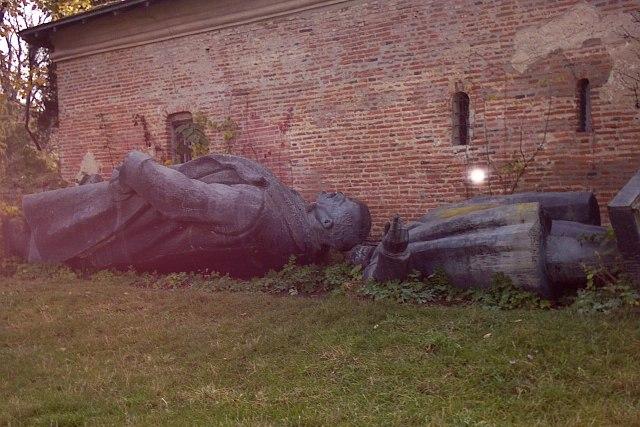
Mogosoia Palace: Lenin, toppled; elsewhere, revered


Mogosoia Palace - 1698-1702
Statue of Lenin

Lenin statue, toppled, Mogosoia Palace, near Bucharest, Romania


Mogosoia Palace is not far from Bucharest. Enjoy the grounds before heading into the traffic. It dates from the 1600's at its earliest parts. See http://www.bookcase.com/~claudia/mt/archives/000066.html

For us, the lure was the statue of Lenin, pulled off its pedestal in Bucharest and ignominiously dumped behind the kitchens here.

The complex shows Byzantine elements, and the style known as "Brancovenesc" after the Voivode, local ruler of Wallachia who built it, or as he is known more simply, Brancovan.  There are combined balconies, arcades, staircases all over, balconies Greek columns, and Renaissance and Baroque - all in one setting. See http://bucharest.8k.com/mogosoaia/  Brancovan offended the Ottoman overlord, however, and lost his head. As with Vlad Tepes, it was not uncommon to keep the head and return it without the body, as Brancovan's wife did,

The Palace became a high-level caravanserai, or "han", with space for passing caravans to enter a protected area for the night of a few days,  See the history of hans at http://www.turkeytravelplanner.com/architecture/SeljukCaravanserais.html

Mogosoia was renovated in the 1800's by an aristocratic family, then followed a series of patrons, owners, literary and cultural uses. It became a salon, and now is in a holding pattern, the lake silting over, the views muted.

Tuesday, January 25, 2005

Brancusi, sculptor? - Mystery Roadside art, and Mystery Man

Totem sculpture, Brancusi-like, woods, after Baie Mare, Romania

This tall totem-type carved pole, or entire tree trunk, is located in the middle of an S curve on a road in the mountains. Workmen farther down said it was by Brancusi. Is this real, or a look-alike?  See http://www.brancusi.com. The mystery remains. For some of his work, see http://www.guggenheim.org/exhibitions/brancusi/overview.

This one was just suddenly there.


This gentleman also appeared in the middle of somebody's orchard as we drove by. Is it Brancusi?

Roadside woods sculpture, seated man, near Baia Mare, Romania

Constantin Brancusi was bearded (search images) mostly, and although he made a self-portrait, it does not resemble this at all. 

Travel tips. Packing: One to wash, one to wear, one for spare: plus:

 Travel Packing

What to take into an unknown.  In the fall, how cold will mountain areas be.  What is needed.  We took too much, but it all fit in our backpacks plus the small duffel we -- in those days -- could send through at no cost.  Fit the categories of items in plastic bags, one per type of clothing, and all in a backpack.  Then the security people can rummage more eaasily.

Looking back after a few years, see what we took, and what we did not need:  Dan, the gent, had about the same.
  • Ladies: lightweight, fast-dry; basically one of each to wash, one to wear, and one for spare.  We now, after several years, are down to one to wash and one to wear.
    • One lightweight duffel-backpack, with extra nylon empty duffel inside for overflow and to keep in the car for the seldom-wears.
    • Two synthetic poly long pants, black, tan. One belt.  One pair black jeans (Skip jeans - too heavy).
  • One black wind-rain top, with hood.
  • One fleece jacket.  Skip that.  Use the sweaters.
  • Two synthetic turtlenecks, black and gray.  One would do, but I liked a change.
  • Two cashmere pullovers, black and gray. Keep the two, if you do without a fleece.
  • Two short sleeve synthetic T-shirts, red and black.  Ok.
  • One pair hiking boots.  Skip that.
  • One pair black walking shoes, slip-ons, no laces.  Keep it simple.
  • One pair lightweight black flats - a must.  Double as slippers, eating out.  Keep those.
  • One longish skirt (splurge on Patagonia, and this is not a paid site but they do a good job)
    • long-ish, in case Orthodox monasteries require that ladies not remind men that women also have two appendages, called legs
    • a skirt like this was needed in Greece, where they forced a long hip shawl on you ifa you came in pants, but not in Romania after all.  
    • The skirt still was nice for pretend dress-up for dinner once in a while.
  • One wool watch cap. We could skip that. Pull up your hood and endure.
  • One pair gloves.  Skip
  • Three pairs socks; one pair knee-hose. Two is enough. Wash and wear.
  • Three pairs underwear, tops and bots.  Two pair of underpants and two bras will do.  Dry them on the back seat.
  • One lightweight robe, for trekking to bath.  Not needed. Take instead a substantial T-shirt dress, sleep in it, lounge in it, have a belt, and sashay down the hall fully dressed.  I have a black heavy T-shirt dress now.  Can go to dinner in it. No dedicated nightgown at all.
Beauty. What?
  • Minimal jams and jellies. Yes.  Your gorgeousness will survive two weeks of deprivation.  Does anyone else care if you have liver spots?  No.