Romania is not a first thought when the old Silk Routes are mentioned. Still, it was an important stopping point, a gateway into Europe. Bucharest boasts a fine caravanserai, now offering a restaurant both in the inner courtyard, and in shelter when needed. The architecture of these structures has remained constant over country boundaries, see AramcoWorld magazine, at http://www.saudiaramcoworld.com/issue/201104/. The large square design, two stories on the outer walls, large usually single gate entry, tall and wide to accommodate loaded camels, a well, areas for a mosque, rooms all around, and accommodations for royal travelers as well as those on pilgrimage.
.
These took money and organization to sustain: unending need for fresh straw, filled ewers of liquids, even wines for the European trader heading east? There would be a scribe at the entry, recording your identity, your goods, your route, how many livestock.
The idea dates, probably, from the 5th Century BC, although there are references in Middle Eastern tales, such as Gilgamesh, to a traveler finding accommodation, an inn, 3000 BCE. Inns, rather ramshackle, called "pandochions" accepted all comers as well, and the Good Samaritan of Bible Story, left the wounded traveler at one of those. Then came a more refined Arabic "funduq".
In Romania today, there are the spaced hostels, pensions, the "cazare" everywhere (see http://www.romaniacazare.com/); and hotelier complexes that recall the huge enterprises of the old days.
History of Romania's invaders, influences ethnic groups, see http://romaniaandmoldova.com/romania/
.
These took money and organization to sustain: unending need for fresh straw, filled ewers of liquids, even wines for the European trader heading east? There would be a scribe at the entry, recording your identity, your goods, your route, how many livestock.
The idea dates, probably, from the 5th Century BC, although there are references in Middle Eastern tales, such as Gilgamesh, to a traveler finding accommodation, an inn, 3000 BCE. Inns, rather ramshackle, called "pandochions" accepted all comers as well, and the Good Samaritan of Bible Story, left the wounded traveler at one of those. Then came a more refined Arabic "funduq".
In Romania today, there are the spaced hostels, pensions, the "cazare" everywhere (see http://www.romaniacazare.com/); and hotelier complexes that recall the huge enterprises of the old days.
History of Romania's invaders, influences ethnic groups, see http://romaniaandmoldova.com/romania/


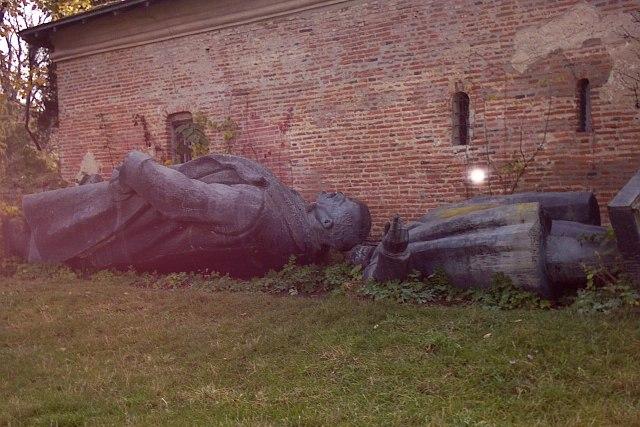 Lenin statue, toppled, Mogosoia Palace, near Bucharest, Romania